Click here to read the introduction to active community involvement
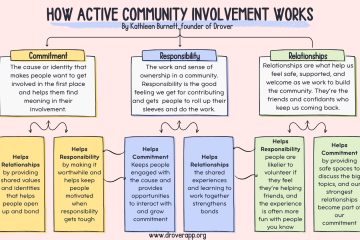
In trying to go into detail about the elements of active community involvement, Commitment is the hardest. It’s alchemy. It’s so personal as to be virtually indefinable. Do we choose what we’re committed to, or do the causes find us? It can be motivated by our own ego as much as it can be a selfless desire to help others. It’s big, complicated, and probably the most important part of community involvement.
Commitment, then, is a broad tent that encompasses anything that gets us interested and involved in something. The tricky part is that our own values and sense of self are then shaped by our involvement, creating a type of commitment that goes deeper than merely supporting a cause. That’s why I say it’s like alchemy or a physical force, but also why this has been an absolute bugger to write. Here goes.
Finding Common Ground
In her anthropological look at her native land, Watching the English, Kate Fox points out that the benefit of her own experience joining clubs and organizations was, “the ease of socializing with people with whom I shared an interest or common cause.” This is the part that often gets us in the door. If we’re interested in, say, model railroads, we like to be around others who don’t mind when we talk about our latest train for minutes on end.
That in itself is a form of commitment. We are gathering together to say that this particular topic is something we want to discuss and take action on, whatever that may be. Not only is it what draws us in, but it’s also what can keep us together despite being different in other ways. It’s the shared moment that allows us to let our guards down a bit and start to get to know people as people.
Once we get our foot in the door, it’s the thing that makes us want to be more involved, get to know others, and make it a part of our lives. Commitment is what encourages us to volunteer or just learn more about an organization. It’s the comfort that comes from knowing we’re around like-minded individuals, working towards a common goal.
Think Small, Grow Big
It’s easy to think that when it comes to commitment, the bigger the better. We should put our effort into major global problems or getting national laws passed. We equate earnestly discussing issues or taking a moral stand with commitment. It doesn’t have to be that way, though. Real commitment often does best in smaller organizations working on local issues.
A friend of mine recently started a charity that builds and promotes gardens in faith communities. Listening to her talking about the beauty of a garden, the way it brings people together, and its profound link to her faith, it’s hard not to be moved. Crucially, her work helps people explore themes such as climate change and food insecurity in an accessible way. They do meaningful work—actually seeing a garden grow and bloom—and get a chance to learn in an environment they already feel connected to.
There’s no shortage of people out there with strong opinions on the issues. There are even plenty of people willing to stand outside and protest perceived injustices. But the splashy events and viral posts don’t mean anything if they ultimately leave people feeling demoralized and overwhelmed. That’s why we all need to take a step back and focus on the small causes we genuinely feel we can do something about.
Institutionalized Commitment
Ultimately I’ve come to realize that one of the best illustrations of commitment in our communities can be found in professional workplaces. If a general sense of working on a shared purpose wasn’t important, businesses wouldn’t be so desperate to try to create it amongst their employees. Every values statement, all-hands meeting, and corporate awards exercise is an artificial creation of something we used to have regularly in our everyday lives.
They call it “employee engagement” and they think it’ll make everyone perform better in their jobs. Mostly this forced commitment leaves us feeling cynical and annoyed. But if it’s so valuable that the business world is putting that much time and effort into it, it’s valuable enough for us to work on and find in our lives outside of work.
This is what will help us get more involved. Every time we listen to that little voice in our head that says we care about a cause, that we like spending time with a group of people, or that an activity just helps us feel more like ourselves, that’s commitment. When we finally get out of our heads and show up in our communities, that’s commitment. It’s the bedrock of active community involvement. Whether it gets us to show up the first time, sign up for a leadership position, or just get out the door for an event, we need it.


0 Comments